Most cracks in Baton Rouge slabs come from clay movement and are not dangerous. Some are. This page helps you sort them and tells you when to bring in a structural engineer. Dollar figures are HomeGuide's national ranges for 2026, not our quotes.
Are the cracks in my foundation serious or cosmetic?
Foundation cracks are usually cosmetic when they are hairline, level on both sides and not growing. They are serious when they are wide, when one side is higher, when they keep opening, or when they come with sticking doors, cracks in brick or sheetrock and sloping floors. On our clay, some seasonal opening and closing is normal. Mark the ends of a crack with pencil and a date and watch it through a wet and a dry season. Nationally, minor crack repairs cost $250 to $800.
My house has a post-tensioned slab. What should I know?
Many Baton Rouge homes built in recent decades have slabs stiffened with steel cables pulled tight after the pour. They cope well with clay. They must not be cut, cored or drilled deeply without locating the cables, because a cut cable releases with great force. Look for a warning stamped in the garage floor. Tell every plumber, fence builder and concrete crew before they work on or beside the slab.
My front steps are pulling away from the house. Why?
The steps and the house are on separate footings, and the steps have settled or tipped. Steps pulling away from the house are common where the fill beside the foundation was loose, or where a downspout empties next to them. A small, stable gap can be sealed against water. Steps that lean, rock or have a gap that keeps growing should be lifted or rebuilt on a proper footing, with a joint left between them and the house.
My garage floor has dropped on one side. Is that a leveling job or a foundation problem?
Look at the walls. If the garage floor has dropped while the walls and the door frame are straight and uncracked, the floor is a separate slab that has sunk into poorly packed fill, and that is a leveling job. If the walls are cracked, the door opening is out of square or the brick outside has stepped cracks, the footing may be moving. That is a foundation question for a structural engineer.
My retaining wall is leaning after heavy rain. What should I do?
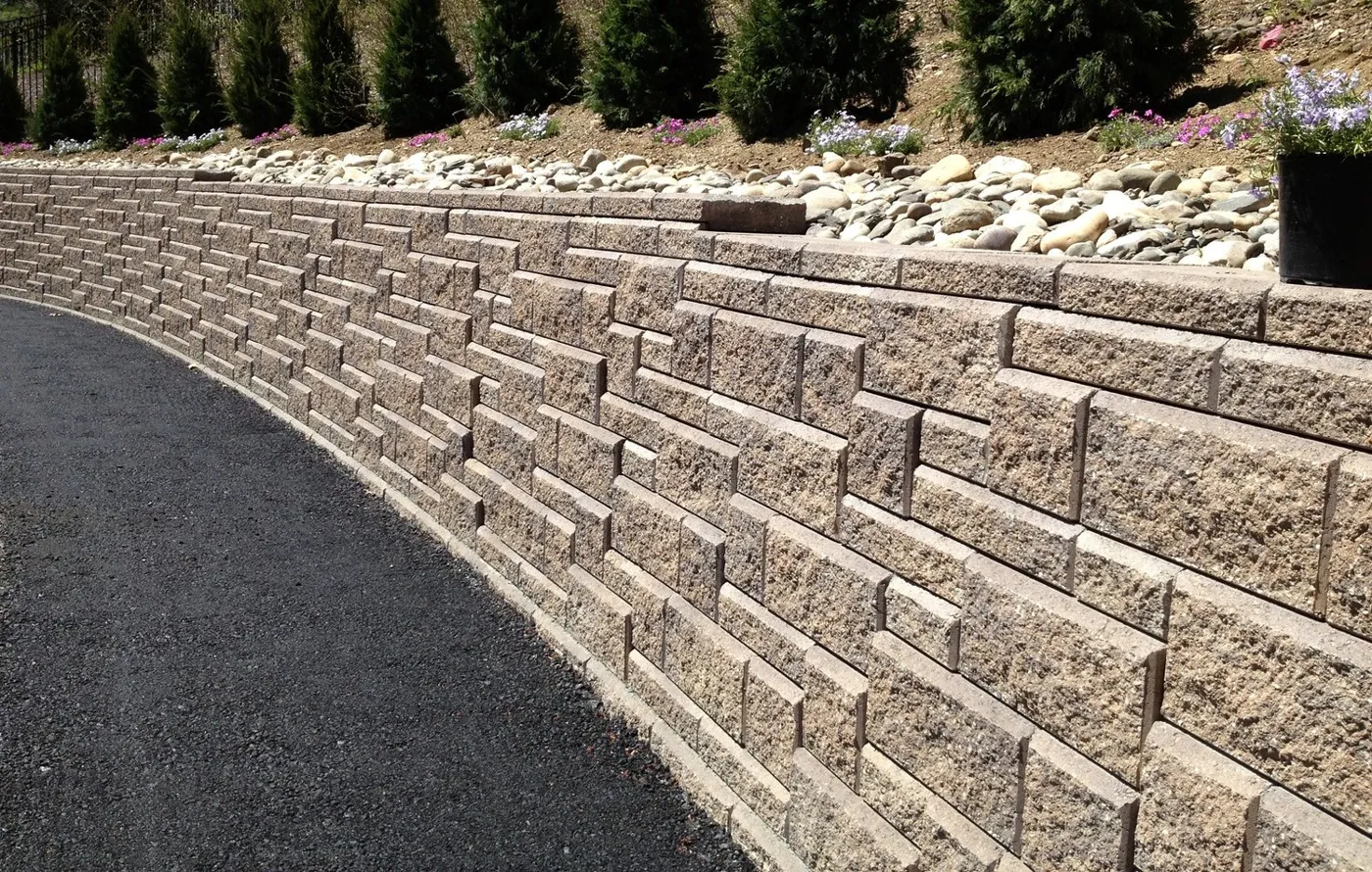
Keep people and cars away from the low side and look at the wall's drain outlets. A retaining wall leaning after rain is being pushed by water trapped in the soil behind it. Clearing blocked outlets and steering surface water away can stop it getting worse. A wall that has moved a lot, has cracked, or holds up a driveway or building needs an engineer. Rebuilding with drainage is often the lasting answer. Nationally a concrete retaining wall costs $3,000 to $10,000.
I was quoted $18,000 for piers and $1,500 to seal a crack in a basement or foundation wall. Which is right?
They are answers to two different problems, so first find out which problem you have. Sealing for $1,500 stops water coming through a crack that is no longer moving. Piers for $18,000 hold up a foundation that is still sinking. If you seal a moving crack, it opens again. If you pier a stable house, you have spent the money for nothing. Pay an independent structural engineer, one who does not sell repairs, to tell you. Basements are rare in Baton Rouge because of the water table, but the same choice comes up with slab foundations. Nationally, settling and sinking repairs run $4,500 to $20,000.
My slab floor is damp or shows white powder. What is it?
The white powder is mineral salt left behind when moisture comes up through the concrete and evaporates. It means water vapor is passing through the slab, which is common here in older houses built without a vapor barrier. It is not harmful in itself, but flooring glued over it will fail. Check outside first: gutters, the slope of the ground and any slab that drains toward the house. Real leaks, such as a broken pipe under the slab, need a plumber. Nationally, fixing foundation leaks costs $2,000 to $12,000.
Could a fault line be damaging my foundation?
If you live on one of the mapped traces, it could. The faults in East Baton Rouge Parish move slowly and steadily, and houses that straddle them are bent a little more each year. The signs are damage that lines up with cracks in the street and in neighboring houses. The Louisiana Geological Survey has published maps for buyers and owners. An engineer who knows the local faults is the right person to assess it.
Does homeowners insurance cover a retaining wall or a cracked slab?
Often not. Standard homeowners insurance covers sudden events named in the policy. Settling, soil movement, wear and gradual water damage are commonly excluded, and flood is a separate policy. A wall knocked down by a vehicle or a fallen tree may be covered. Read your policy and ask your agent in writing before assuming either way. If flood water undermined a slab, your flood policy is the one to check.
The only real price is one written after we have seen your property. The estimate is free. Call (225) 434-4721 or text us a few photos.