Clay movement, water and roots are behind most damaged concrete in Baton Rouge. We work out which one moved your slab before proposing a repair, and we say so when a patch will not last. Send photos by text for a first opinion.
Before fixing a crack, we want to know why it is there. In Baton Rouge the answer is usually one of four things. The clay moved. Water from a downspout or a leaking pipe softened one area. A tree root pushed up. Or the slab was poured thin with no joints. A few properties also sit on or near one of the parish's known fault lines, where damage runs in a line across the street, the drive and sometimes the house. Each cause has a different fix, and some have none short of replacement.
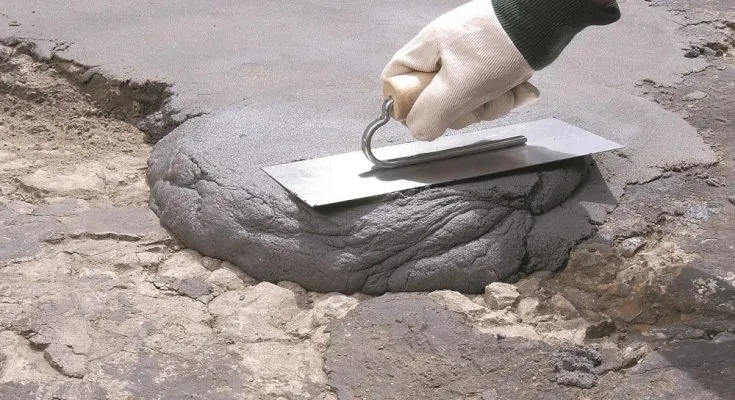
Repairs we do include sealing cracks so water stays out, cutting out and re-pouring single broken sections, grinding raised edges, and resurfacing worn but solid slabs. Lifting a sunken slab by pumping material under it is also an option for sound concrete, and we will tell you whether your slab is a candidate. We do not sell a patch where a patch will not hold. A wide crack on moving clay will reopen, and it is better you hear that before paying.
Text us photos with something in the frame for scale, plus a wider shot that shows where water goes when it rains. Often that is enough for us to say whether you are looking at a small repair, a section replacement or a new slab. Cracks in a house foundation are a separate matter. Those may need a structural engineer's opinion, and we will say so if we think yours does.
Concrete repair in Baton Rouge: common questions
Is the crack in my slab from the Baton Rouge fault?
Possibly, if you live along one of the mapped fault traces and the damage lines up with cracks in the street and in neighbors' concrete. The Louisiana Geological Survey has published maps of the active faults in East Baton Rouge Parish. A structural engineer can tell you whether the fault or ordinary clay movement is the cause.
Will a crack repair last through a dry summer?
A flexible sealant in a narrow, level crack usually stretches enough to stay sealed as the clay shrinks. A hard patch in a wide crack usually does not. If the two sides of the crack sit at different heights, the slab has lost support and sealing alone will not last.
Can you fix just the one section that sank?
Often, yes. If the rest of the slab is level and solid, we saw-cut along the joints, remove the bad section, rebuild the base and pour it again. The new section will look newer than its neighbors for a few years.
How it works
- Free estimate: Call, text or book online. We visit and measure.
- Written quote: Clear pricing with finish options.
- Prep & forms: We excavate, grade, compact the base and set forms and reinforcement.
- Pour, finish & cure: We pour, finish, cut control joints and tell you when you can use it.